ORDERS $150+ QUALIFY FOR FREE SHIPPING

Menu

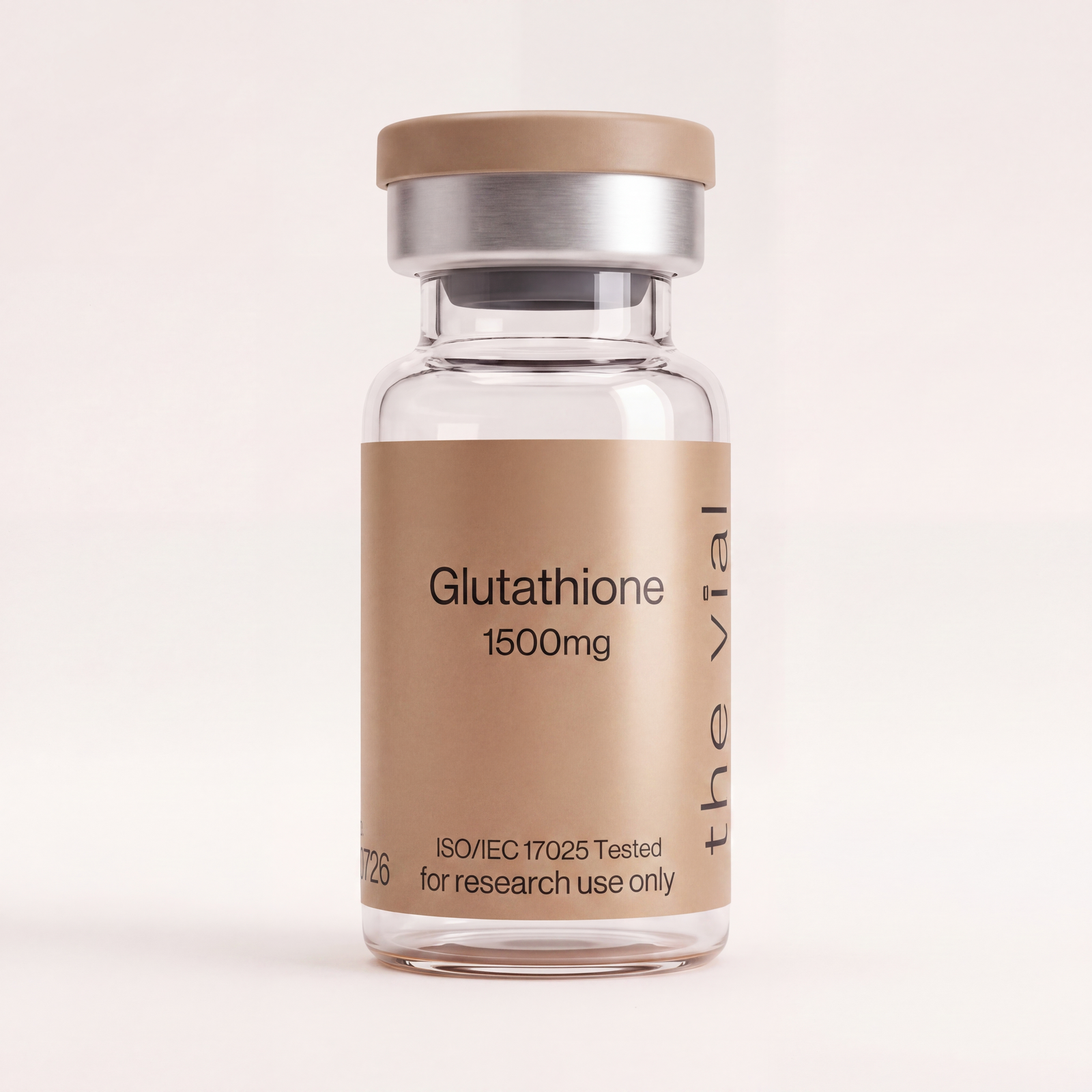
Glutathione is a naturally occurring tripeptide composed of glutamate, cysteine, and glycine, and is a key component of cellular antioxidant defense systems. It is involved in redox balance and protection against oxidative stress at the cellular level. This compound is studied for its role in maintaining mitochondrial function and regulating cellular homeostasis. Commonly utilized in research settings to investigate oxidative stress response, cellular signaling mechanisms, and redox-related pathways. Supplied by Peptico for research-use only.

SIZE:
1500MG

Availability: 10 in stock

- +

All Orders Ship within
24 Business Hours

Free Shipment Protection

Priority Shipment Options Available at Checkout

Format
Lyophilized powder
Approved Exclusively For
Laboratory and Analytical Research
Handling
Utilize appropriate sterile technique and controlled environments during preparation.
Short-Term Storage - Lyophilized Powder Form Only
  • For maximum potency, lyophilized materials may generally be stored between 2°C and 8°C (36°F to 46°F) for up to 4 weeks when maintained in their original, sealed lyophilized form.
  • Maintain a cool and dry environment.
  • Protect from moisture and light.
  • Minimize exposure to humidity and temperature fluctuations.
Long-Term Storage - Lyophilized Powder Form Only
  • For maximum potency and long-term preservation, lyophilized materials may generally be stored between -20°C and -80°C (-4°F to -112°F) for up to 1 year when preserved in their original, sealed lyophilized form.
  • Maintain a cool and dry environment.
  • Protect from moisture and light.
  • Minimize exposure to humidity and temperature fluctuations.

Important Note:

Storage guidelines apply only to lyophilized material in its original, sealed, and untampered vial.

COA History

All shipped products include a unique batch number printed on the vial label. This batch number corresponds to a third-party Certificate of Analysis tested by an ISO/IEC 17025 accredited laboratory.


The COA attached at the top of this page, along with the COA marked “Current” below, represents the active production batch currently being shipped. This same batch number will appear on the label of your vial.


For previous purchases, please refer to COAs marked “Historical” and match the batch number on your vial to the batch number listed on the corresponding COA.


For a complete record of testing documentation across all products and batches, please visit our COA Vault, which includes both current and historical COAs.
Loading COA history...

Frequently Researched Together:

Molecular Profile

What is Glutathione?

Scientific compound data sourced from PubChem.

Chemical Structure Chemical structure depiction for Glutathione PubChem CID 124886
Type
Chemical compound
PubChem CID
124886
CAS Number
70-18-8
Molecular Formula
C10H17N3O6S
Molecular Weight
307.33 g/mol
IUPAC Name
(2S)-2-amino-5-[[(2R)-1-(carboxymethylamino)-1-oxo-3-sulfanylpropan-2-yl]amino]-5-oxopentanoic acid
InChIKey
RWSXRVCMGQZWBV-WDSKDSINSA-N

Research

Sources & References

API results related to Glutathione.

PubChem Compound data

Glutathione compound record

CID: 124886

(2S)-2-amino-5-[[(2R)-1-(carboxymethylamino)-1-oxo-3-sulfanylpropan-2-yl]amino]-5-oxopentanoic acid

Formula: C10H17N3O6S • Molecular weight: 307.33

View source
PubMed Scientific paper

Key molecular networks underlying retinol's biphasic effects on cell proliferation through multi-omics integrative analysis using genome-scale metabolic modeling.

Synthetic and systems biotechnology

He P, Xiang G, Yan Y et al. • 2027

Publication date: 2027 Jan

View source
PubMed Scientific paper

Hormone-metabolism crosstalk in plants: an integrated signaling network coordinating growth and stress adaptation.

Plant signaling & behavior

Murtaza G, Ahmed Z, Ullah S et al. • 2026

Publication date: 2026 Dec 31

View source
PubMed Scientific paper

Foliar application of gamma aminobutyric acid regulates sulfur metabolism and restores redox balance to improve aluminum tolerance in Camelina sativa.

Plant signaling & behavior

Murtaza G, Ahmed Z, Hassan NE et al. • 2026

Publication date: 2026 Dec 31

View source
PubMed Scientific paper

Agmatine and N-hydroxypipecolic acid synergistically enhance salt tolerance in wheat through antioxidant defense, proline metabolism, and photosynthetic protection.

Plant signaling & behavior

Murtaza G, Mamarakhimov O, Musaev K et al. • 2026

Publication date: 2026 Dec 31

View source
PubMed Scientific paper

Repurposing nitazoxanide as a novel ferroptosis inducer for triple-negative breast cancer via dual disruption of iron homeostasis and the β-catenin/GPX4 axis.

Redox report : communications in free radical research

Zhang C, Yang T, Meng Y et al. • 2026

Publication date: 2026 Dec 31

View source

⚠️ IMPORTANT RESEARCH NOTICE

This product is NOT for human consumption.
Supplied strictly for laboratory and analytical research use only, it is not intended to diagnose, treat, cure, or prevent any disease, and must not be used for clinical, veterinary, or therapeutic applications.
All information provided, including referenced research and data, is for educational and scientific context only and should NOT be interpreted as medical guidance.
By purchasing, you confirm that you are a qualified individual or entity operating in accordance with applicable local, state, and federal regulations. All responsibility for handling, use, and compliance rests solely with the purchaser.

Scroll to Top